Keeping your data safe with an offshore team: a practical checklist
Contracts, devices, access and offboarding. The controls that matter most before a remote team touches your systems.
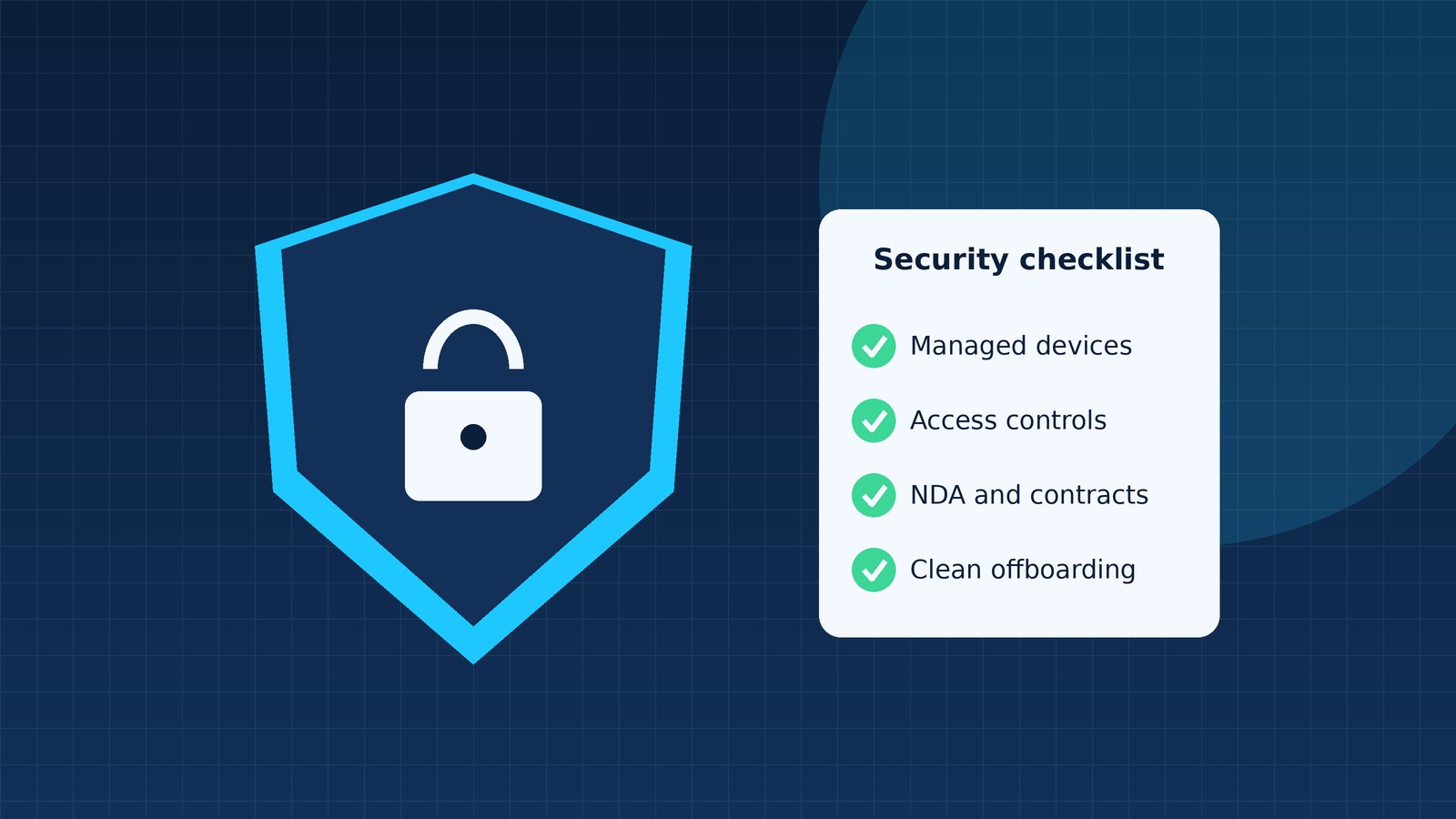
Security worries are one of the main reasons companies hesitate to build a remote team. Most of the risk can be handled with a short list of controls, set up before day one.
Before anyone starts
- NDA and IP assignment signed. Everything the team creates should belong to you from the first commit.
- Background and reference checks appropriate to the role.
- A named owner on the provider side who is accountable for security.
Devices and sign-in
- Company-managed laptops with disk encryption and automatic updates.
- VPN for access to your internal systems.
- Multi-factor sign-in on every tool, without exceptions.
- No personal devices for client work.
Access
Give each person the least access their role needs, through their own named account. Shared logins make it impossible to know who did what, and impossible to remove one person cleanly.
Review access every quarter. Roles change, and permissions tend to pile up.
Sensitive data
If your team handles health, financial or personal data, agree the rules in writing: where data may be stored, whether it can be downloaded, and how it is deleted. Healthcare work in the US needs HIPAA-compliant handling. If you serve people in the EU, the UK or India, your data handling should also account for GDPR, UK GDPR and India's DPDP Act.
Offboarding
Most leaks happen at the end, not the start. On someone's last day, remove access to every system, recover the device and confirm their work is handed over. Keep a checklist and tick it every time.
How we handle it
Every VertPods pod member signs an NDA and IP assignment before starting, and works on a managed device with VPN and multi-factor sign-in. Healthcare pods are HIPAA-compliant. Read more on our security page.